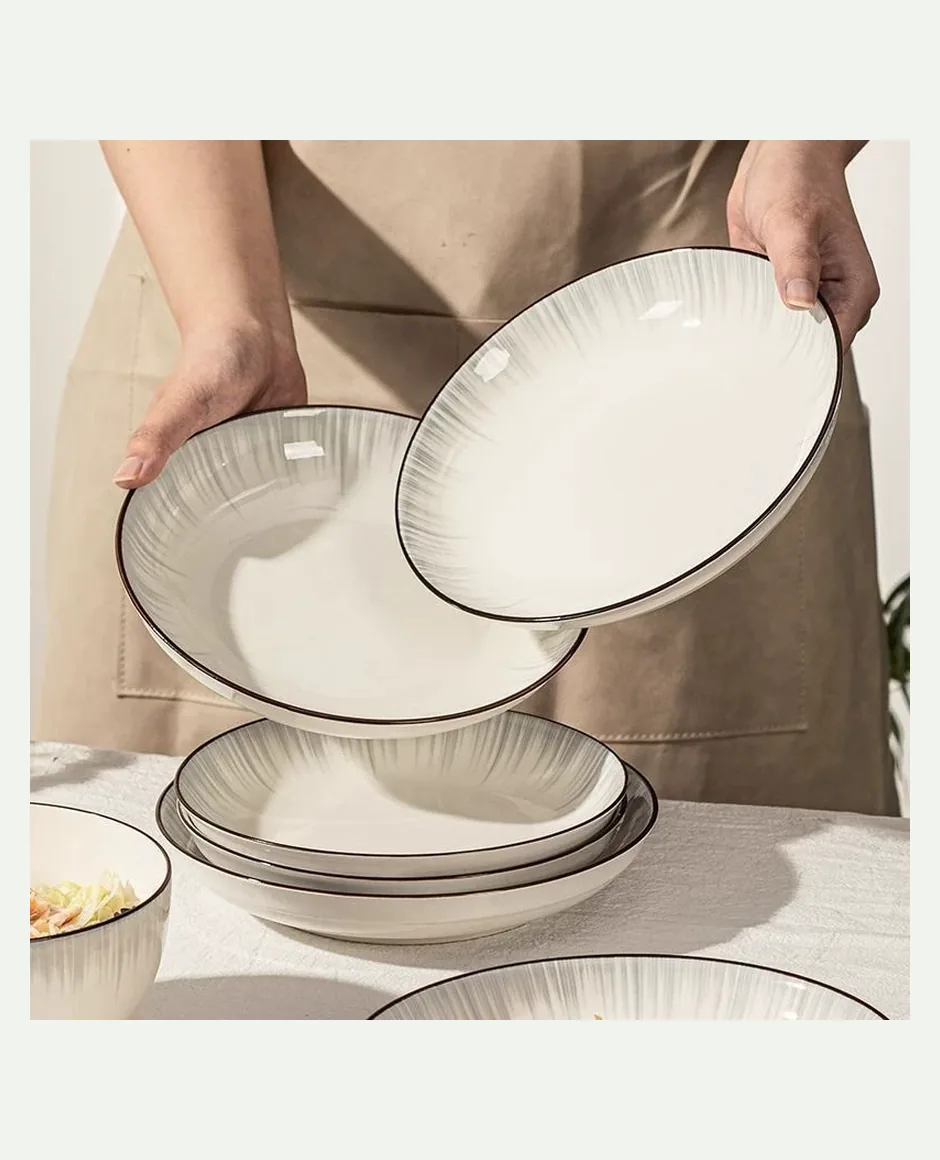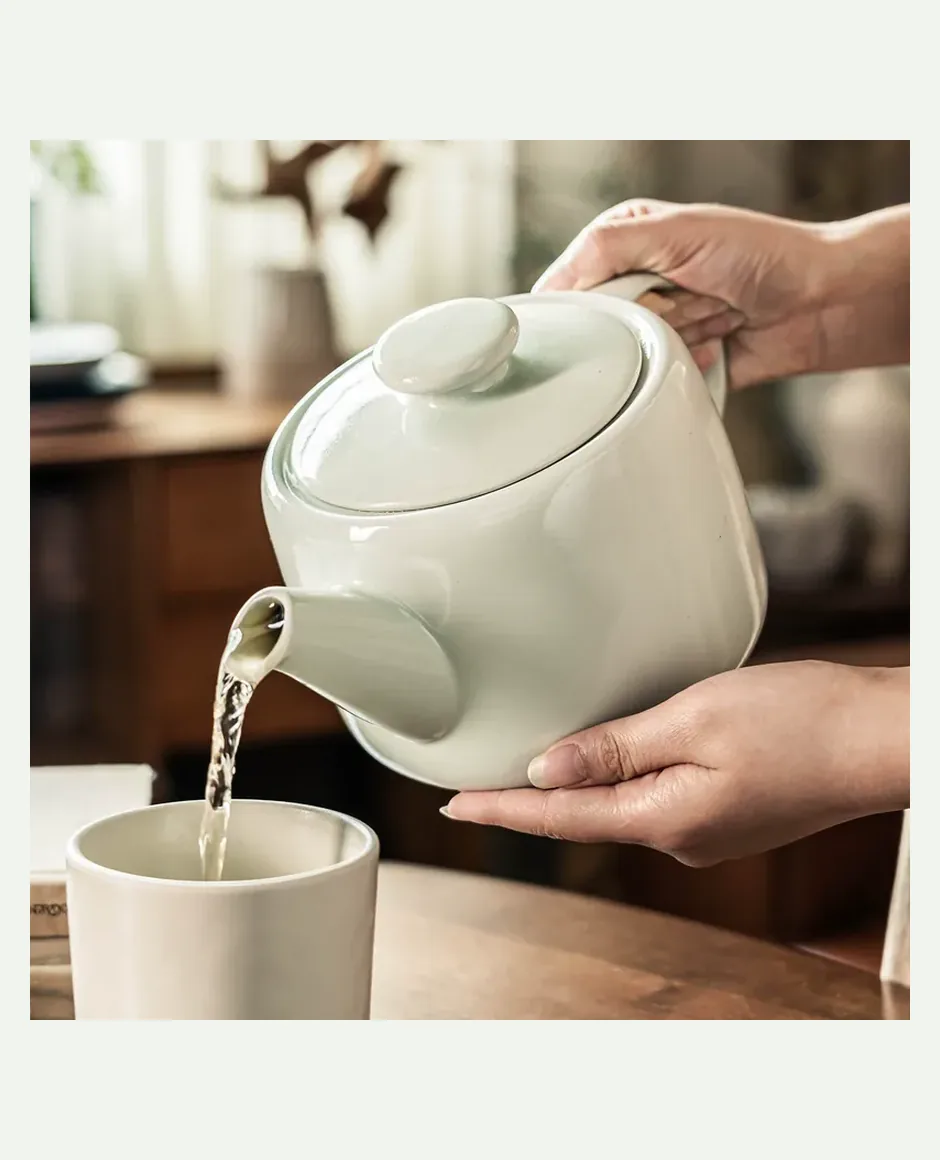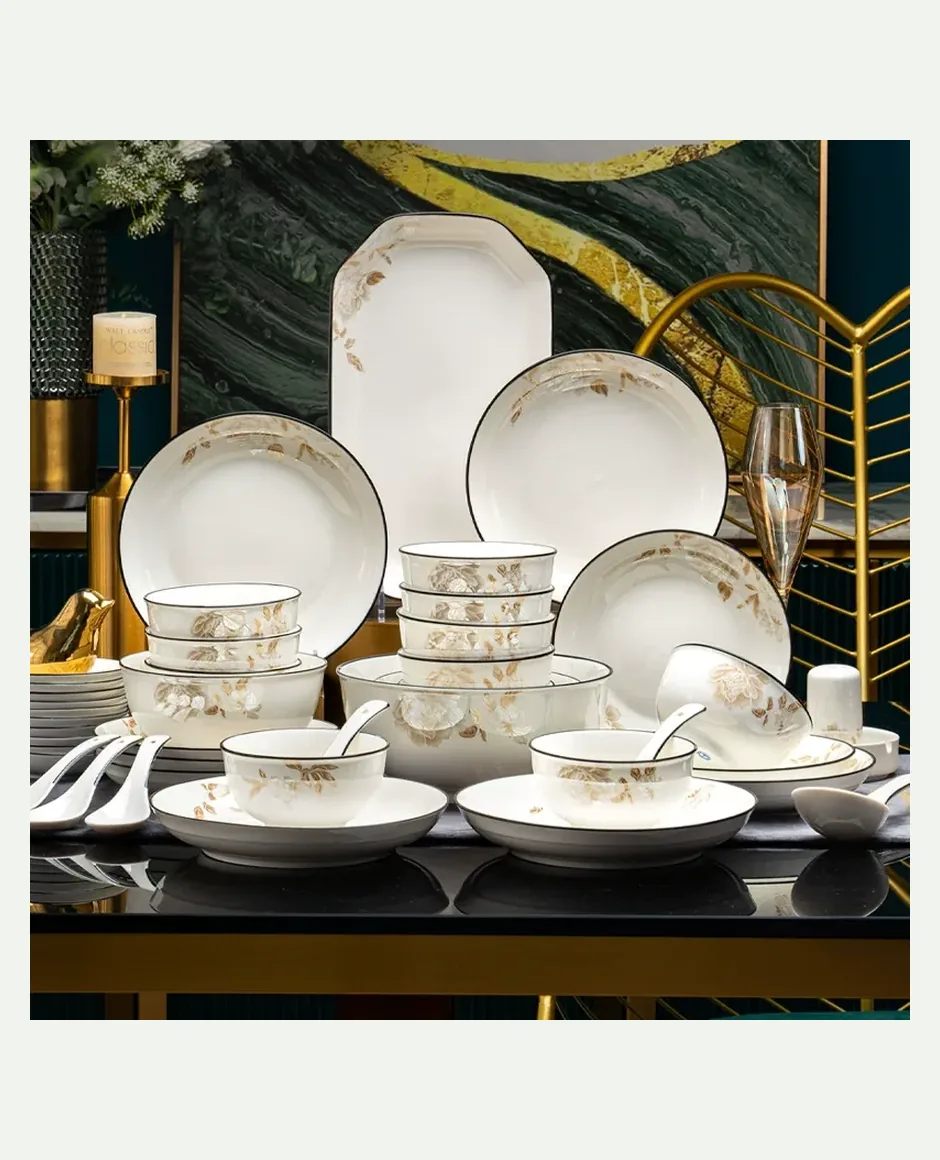
Bone china offers translucency and a refined feel; porcelain is denser and more chip-resistant. The right pick depends on use.
Bone china contains bone ash, which gives it a warmer tone, greater translucency and a lighter, more refined feel in the hand. Porcelain is fired denser and stays more opaque, so it reads as solid and practical rather than delicate.
On durability, porcelain is harder and more chip-resistant, which suits high-volume commercial use. Bone china is more prone to chipping but delivers a premium look that suits fine dining and luxury presentation. Bone china also costs more, driven by the bone ash content and the more delicate production process.
For everyday restaurant service, porcelain is usually the practical choice. For upscale settings where presentation matters most, bone china is often preferred. Both are available through our partner factories in Jingdezhen, Chaozhou, Liling and Jingshan. MOQ is 1 piece, samples are made in about 7-10 days, and food-contact testing to FDA, LFGB and SGS standards is available on request.
Tell us the product, quantity and destination — we'll reply with pricing and lead time within one business day.
Request a Quote